
Welcoming a new member into the family is a joyous occasion, accompanied by a multitude of decisions. One question we hear frequently from new parents across Australia and New Zealand is: Are baby loungers actually safe?
The short answer is yes, absolutely—but strictly when used correctly for supervised, awake time. With the introduction of the latest Australian Competition and Consumer Commission (ACCC) safety standards, the guidelines surrounding baby loungers, nests, and pods have never been clearer. In this article, we delve into the new safety aspects of baby loungers to help you make informed, secure decisions for your little one, while still enjoying the convenience these versatile products offer.
Understanding the ACCC Safety Standards

In recent years, the ACCC has updated the Infant Sleep Products Safety Standard to protect infants across Australia. The most critical takeaway for parents is this: Baby loungers are not sleep products.
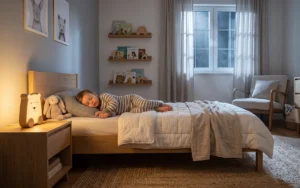
According to Australian law and pediatric experts, loungers, nests, and pods should never be used for sleeping, unsupervised naps, or co-sleeping. Infants must always sleep on a firm, flat, and clear surface, such as a cot or bassinet that meets mandatory Australian standards.
If your baby happens to fall asleep while relaxing in a lounger, the safest practice is to immediately and gently transfer them to their designated safe sleep space.
How to Safely Use a Baby Lounger
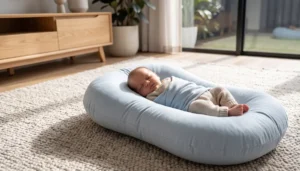
If they aren’t for sleeping, how do you use them? When utilized correctly, a high-quality baby lounger is one of the most practical tools for modern parents. They provide a safe, cozy docking station for your baby while they are awake and fully supervised.
Here are the best (and safest) ways to use them:
- Supervised Lounging & Interaction: Need your hands free to fold laundry or have a cup of coffee? A lounger allows your baby to rest at a slight, comfortable angle, enabling them to look around, coo, and interact with you while you stay right beside them.
- Tummy Time Support: Tummy time is essential for neck and shoulder muscle development. The contoured edges of a well-designed lounger can provide gentle support to make tummy time more enjoyable for your infant.
- A Portable Companion: Moving from the living room to the kitchen, a lightweight lounger provides a familiar, clean environment for your baby to relax, no matter where you are in home.
What to Look for in a Safe Baby Lounger
When evaluating the safety of a lounger, material selection and design are paramount. You must look for products that prioritize breathability and ergonomic support.
1. Breathability and Airflow: A safe baby lounger must feature breathable, organic materials that promote air circulation and reduce the risk of overheating.
2. Ergonomic, Anti-Roll Design: The best loungers are wider at the head than at the legs, allowing the baby to rest comfortably while preventing them from tipping over or rolling out during their supervised playtime.
3. Hypoallergenic & Washable Fabrics: Babies have sensitive skin (and are prone to unexpected messes!). Opt for loungers made from non-toxic materials with easily removable, machine-washable covers.
The Snoozy Monkey Difference: Designed for Safe Awake Time
We understand that parenting is a round-the-clock job, and safety is your ultimate priority. That is why our collection of loungers is engineered specifically to align with Australian safety guidelines for supervised awake time.
When you choose a Premium Baby Lounger from Snoozy Monkey, you are investing in a product crafted from ultra-soft, breathable organic cotton. Our exclusive center design ensures your little one feels secure and comfortable, giving you the peace of mind to enjoy hands-free moments while keeping them right by your side.
Ready to find the perfect, safe lounging companion for your baby’s awake time? Explore our exclusive collection of Australian Baby Loungers here.