When selecting a resting space for your newborn’s supervised awake time, the structural material of the lounger is just as critical as its ergonomic shape. In the Australian climate, where temperatures fluctuate drastically, thermal regulation is a primary safety concern for parents.
The market is heavily saturated with cheap, mass-produced loungers utilizing standard polyurethane (PU) foam. While inexpensive, PU foam presents significant thermal and hygiene challenges. This guide breaks down the fluid dynamics and thermal retention properties of standard foam versus advanced cellulosic fibers, explaining why a premium newborn baby lounger built with a Tencel™ core is the superior technical choice.
Thermal Dynamics: The Danger of Standard Foam
Standard polyurethane foam is a closed-cell synthetic material derived from petrochemicals. By design, closed-cell foams are insulators; they trap body heat and lack air permeability.
When a baby rests on standard foam, the heat generated by their body has nowhere to dissipate. This creates a micro-climate of trapped heat and moisture, leading to rapid overheating and sweating. Furthermore, synthetic foams are notoriously difficult to clean, as moisture trapped deep within the synthetic core can become a breeding ground for bacteria and mold.
The Tencel™ Advantage: Natural Thermoregulation
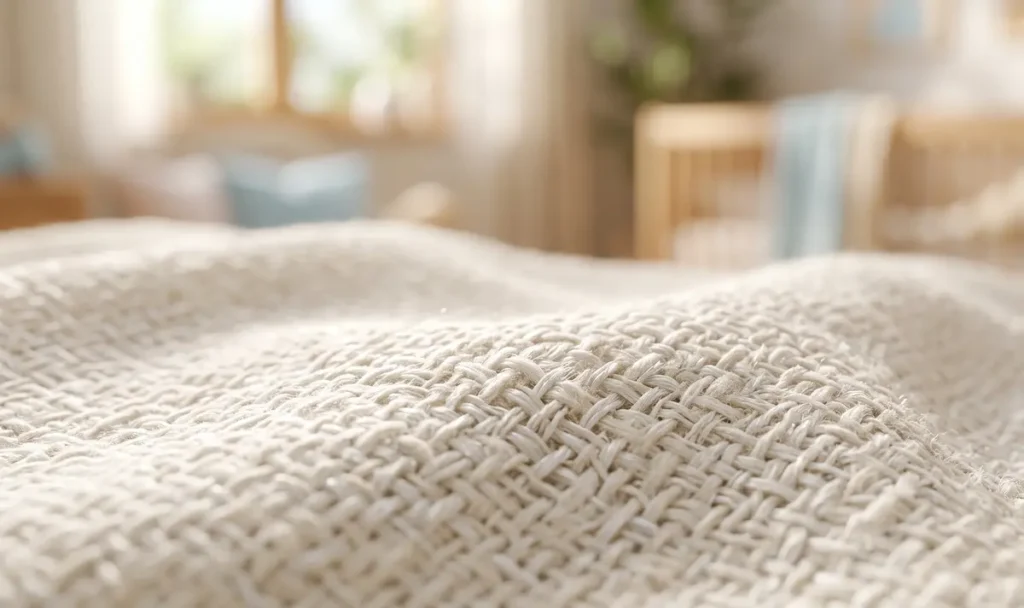
Tencel™ (Lyocell) is a specialized cellulosic fiber extracted from sustainably sourced wood pulp. Unlike synthetic foams, Tencel™ features a unique fibril structure that naturally manages the transportation of moisture.
This material actively absorbs moisture away from the skin and releases it back into the atmosphere, creating a continuous cooling effect.
Material Comparison Matrix
| Specification | Standard Polyurethane Foam | Snoozy Monkey Tencel™ Core |
| Origin | Synthetic / Petrochemical | Natural Cellulosic Fiber |
| Thermal Retention | High (Traps body heat) | Low (Actively dissipates heat) |
| Moisture Wicking | Poor (Surface pooling) | Excellent (Fibril absorption) |
| Breathability | Low | High |
| Skin Compatibility | Can cause heat rashes | Hypoallergenic, gentle on delicate skin |
Structural Integrity and ACCC Safety Compliance
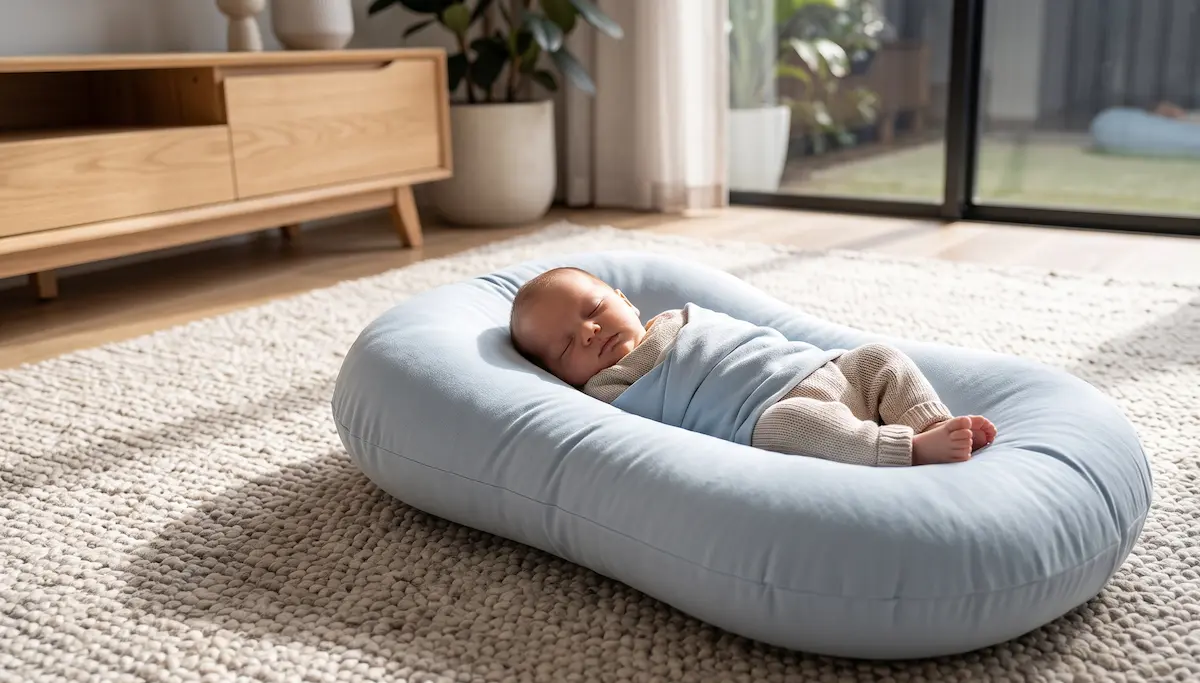
A baby lounger must provide firm support. Soft, sinking surfaces pose a risk to an infant’s developing spine and airways. The Tencel™ core utilized in the Snoozy Monkey loungers is engineered to offer high-density structural support without compromising breathability.
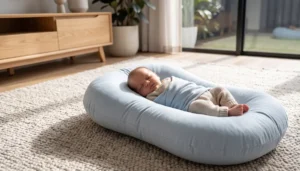
The design features a recessed center that cradles the baby, preventing them from rolling over. It is vital to remember that in accordance with the Australian Competition and Consumer Commission (ACCC) safety guidelines, baby loungers of any material are strictly designed for supervised, awake time only. They must never be used for unsupervised sleeping, naps, or placed inside a cot.
Maintenance and Hygiene Engineering
A core advantage of a Tencel™ based lounger is its ease of maintenance. While standard foams degrade or warp when exposed to water, the Snoozy Monkey portable baby lounger is entirely machine washable.
- Tencel™ Core Maintenance: Wash on a cold, delicate cycle (under 30°C) and air-dry flat in the shade.
- 100% Cotton Cover: Wash below 40°C using bleach-free detergents.
By avoiding synthetic foams and investing in a Tencel™ core with a 100% cotton cover, parents ensure their newborn enjoys a cool, hygienic, and ergonomically secure environment during their critical awake and development times.