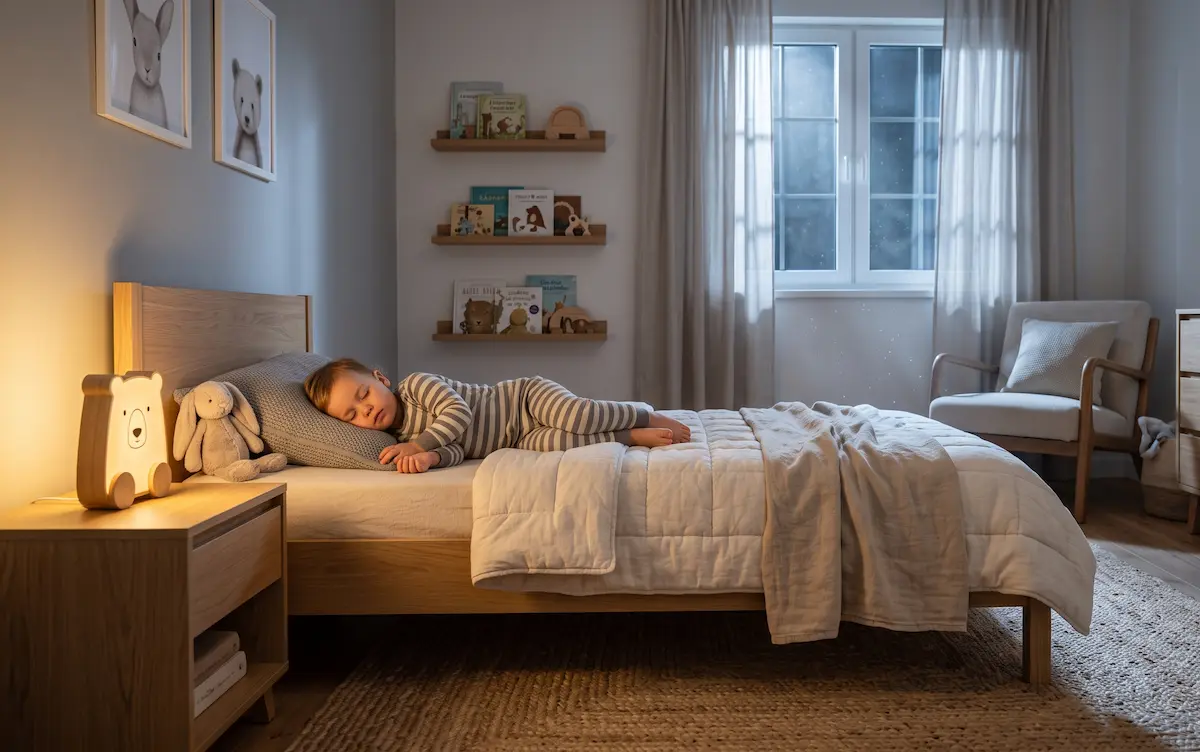
Moving a toddler from the enclosed safety of a cot to a standard open bed is a major developmental milestone. However, this transition introduces a new variable: nocturnal spatial awareness. Toddlers lack the developed proprioception (the body’s ability to sense movement and location) of older children, making them highly susceptible to rolling out of bed during sleep cycles.
According to Red Nose Australia, the transition typically occurs between 2 and 3.5 years of age, often triggered when a child attempts to climb out of the cot. When making this move, securing the perimeter of the new bed is critical. This guide analyzes the structural differences between traditional mechanical bed rails and modern, high-density friction bumpers.
The Flaws of Traditional Mechanical Bed Rails
Historically, parents have relied on rigid metal and mesh bed rails. While functional, these systems present several mechanical and logistical drawbacks:
- Entrapment Risks: If a mechanical rail is not anchored perfectly flush against the mattress, it creates a dangerous gap where a child’s limbs can become trapped. The Australian Competition and Consumer Commission (ACCC) actively monitors bed rail safety standards due to these mechanical failure points.
- Installation Friction: They require lifting heavy mattresses, tightening straps, and potentially damaging the bed frame or mattress springs over time.
- Zero Portability: Rigid metal frames cannot be packed for holidays, leaving your child vulnerable when sleeping in unfamiliar hotel beds.
The Biomechanics of Friction-Based Bed Rails
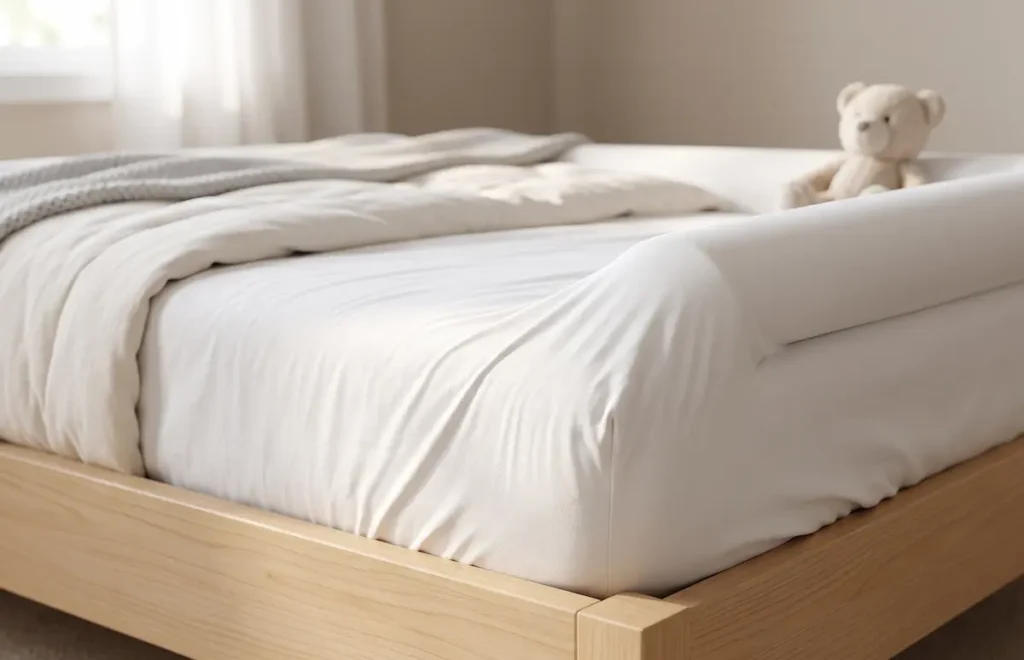
Modern sleep architecture has shifted towards active prevention without mechanical anchors. Utilizing high-density foam or inflatable bed rails, parents can secure the bed using simple physics: surface friction and the tension of a fitted sheet.
Instead of trapping the child with a metal fence, these bumpers are placed directly on the mattress pad, under the fitted sheet. The tension of the sheet pushes the high-friction material into the mattress, locking it in place. When a sleeping toddler rolls against it, the bumper acts as a gentle, tactile boundary, subconsciously prompting them to roll back toward the center of the bed without waking them.
Structural Comparison: Mechanical vs. Friction Rails
| Specification | Traditional Metal/Mesh Rails | Friction-Based Bumpers (Inflatable/Foam) |
| Installation Mechanism | Straps, screws, and under-mattress anchors | Placed under the fitted sheet (Friction lock) |
| Setup Time | 10 – 20 minutes | < 2 minutes |
| Entrapment Risk | High (if improperly installed) | Near Zero (No gaps between rail and mattress) |
| Travel Compatibility | None (Rigid and heavy) | Extremely High (Deflates or rolls into luggage) |
| Tactile Feedback | Hard metal/mesh (Can wake the child) | Soft, yielding barrier (Promotes continuous sleep) |
Signs Your Toddler is Ready for the Transition
Before investing in bed safety equipment, verify that your child is developmentally ready to leave the cot. Look for these hard indicators:
- Height: The child is over 89 cm (35 inches) tall, or the cot rails fall below their chest level when standing.
- Physical Agility: They are actively attempting to climb over the cot rails, turning the cot into a fall hazard.
- Toilet Training: They are beginning nighttime toilet training and require independent access to the bathroom.
Executing a Safe Transition
When the data points to readiness, execution is simple. Lower the cot mattress to the floor level if possible, or move directly to a low-profile standard bed. Immediately install a friction-based, portable toddler bed rail under the fitted sheet.
By eliminating the mechanical risks of traditional metal rails and utilizing lightweight, travel-friendly alternatives, you ensure a safe, continuous sleep environment for your child—whether they are transitioning in their bedroom or sleeping away on a family holiday.