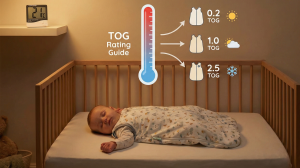
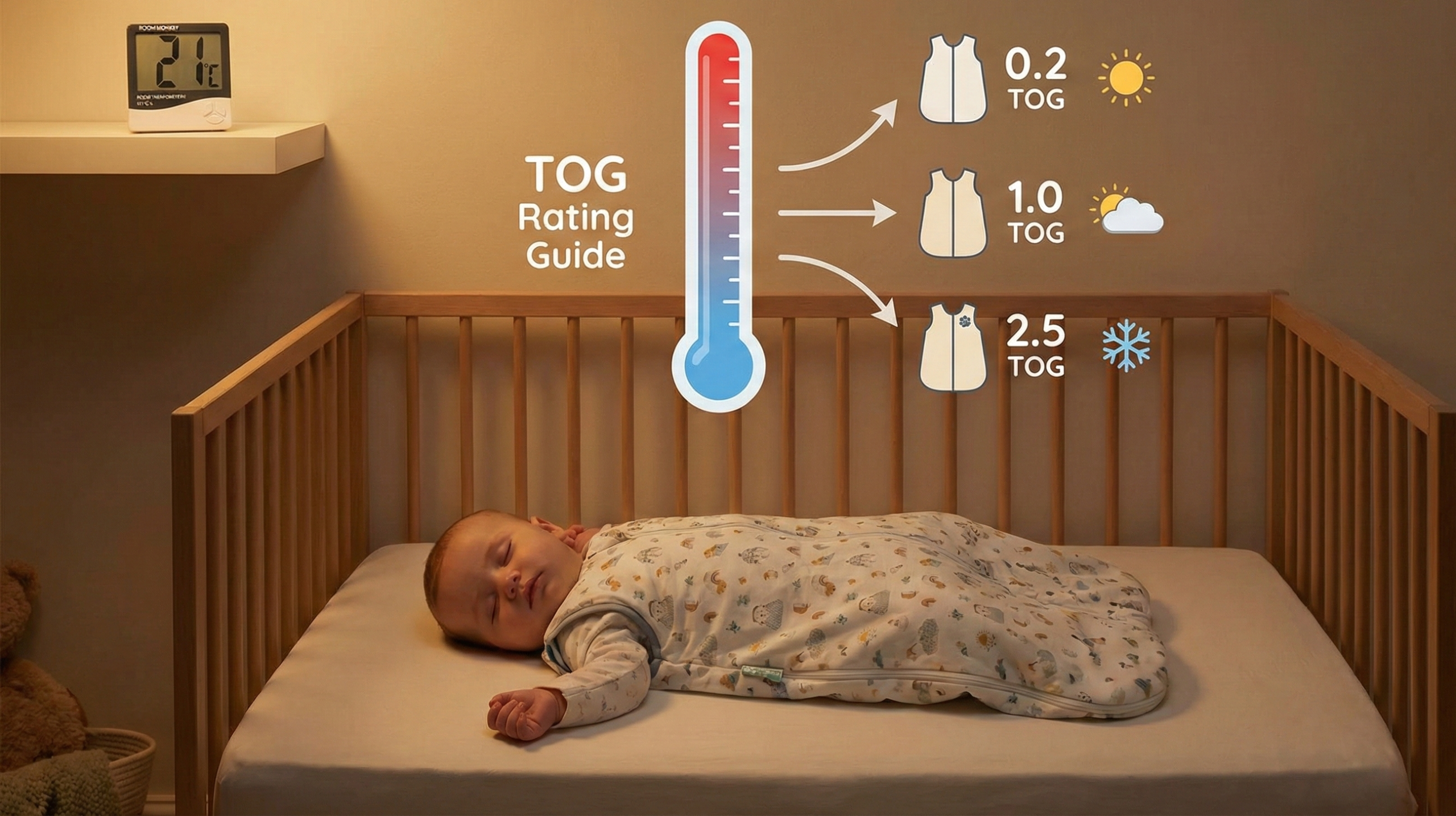
If you are a new parent scanning the aisles of a baby store, you have likely stood frozen in front of a wall of sleeping bags, staring at numbers like 0.2, 1.0, and 2.5, wondering, “What on earth is a TOG?”
You are not alone. Understanding TOG ratings is one of the most confusing parts of setting up a safe sleep environment. Yet, getting it right is crucial for preventing your baby from overheating or waking up cold in the middle of the night.
In this guide, we demystify the numbers. We will explain exactly what is tog rating, provide a simple chart for Australian climates, and reveal the missing piece of the warmth puzzle that most parents forget.
What is TOG Rating?
TOG stands for “Thermal Overall Grade.” It is a unit of measurement used to calculate the thermal insulation of a product—usually sleeping bags, swaddles, and doonas.
Put simply: The higher the TOG, the warmer the product.
- Low TOG (0.2 – 1.0): For summer and hot climates.
- Mid TOG (1.0 – 2.5): For autumn, spring, and mild winters.
- High TOG (2.5 – 3.5): For cold winter nights.
Unlike blankets, which can be kicked off (or pulled over a face), a TOG-rated sleeping bag provides consistent warmth around the clock, which is why they are a staple in Aussie nurseries.
The Australian & NZ Context: Understanding TOG Ratings
Why do we specifically search for a TOG rating guide in Australia and New Zealand? Because our weather is unpredictable! In Melbourne, Tasmania, or Wellington, you might need a 2.5 TOG in November, while in Queensland, a 0.2 TOG might be all you need year-round.
Understanding your nursery’s specific temperature (not just the weather outside) is key to choosing the right gear.
The Ultimate TOG Rating Guide (Temperature Chart)
To answer the burning question—“How do I dress my baby tonight?”—use this general guide. Remember, every child is different, so always check their chest or back to ensure they aren’t too hot.
| Room Temperature | Recommended TOG | Recommended Clothing |
| 24°C + (Hot) | 0.2 TOG | Short sleeve bodysuit (or just nappy) |
| 20°C – 23°C (Warm) | 1.0 TOG | Short sleeve bodysuit or light pyjamas |
| 16°C – 20°C (Mild) | 2.5 TOG | Long sleeve pyjamas + bodysuit |
| Below 16°C (Cold) | 3.5 TOG | Warm pyjamas + long sleeve bodysuit |
The Missing Piece: It’s Not Just About the Bag
Here is the secret that most TOG rating guides miss: Warmth is a system.
You can put your toddler in the thickest 3.5 TOG sleeping bag available, but if they are sleeping on a thin, uninsulated surface, they will still get cold. This is because the ground (or cold air circulating under a thin cot mattress) sucks heat away from their body.
This is particularly important if you are travelling or camping. A standard portable cot often has a paper-thin mattress that offers zero insulation.
To ensure the TOG rating actually does its job, you need a sleeping base that provides insulation from below.
- At Home: Ensure your cot mattress is of high quality and draft-free.
- While Travelling: Use an Inflatable Travel Bed with a proper air chamber. The air inside the mattress acts as a barrier against the cold floor, working with your sleeping bag to keep your little one toastie.
Planning a winter camping trip? Read our detailed breakdown on staying warm with the right Kids Camping Bed.
Safety First: Preventing Overheating
While we worry about babies getting cold, overheating is a significant risk factor for SIDS (Sudden Infant Death Syndrome).
- Don’t trust the thermostat blindly: Use a room thermometer.
- No Hoods: Ensure sleeping bags don’t have hoods, as these interfere with heat regulation from the head.
- Check the baby, not the hands: A baby’s hands are often cool. Feel their chest or back. If it feels hot or sweaty, lower the TOG or remove a layer of clothing.
Mastering the TOG ratings in Australia is all about balance. Measure the room temperature, consult the guide, and ensure your child is sleeping on a supportive, insulated surface like those available at Snoozy Monkey.
Sleep safe, sleep warm!